


Syllabus: GS1/ History and Culture
Context
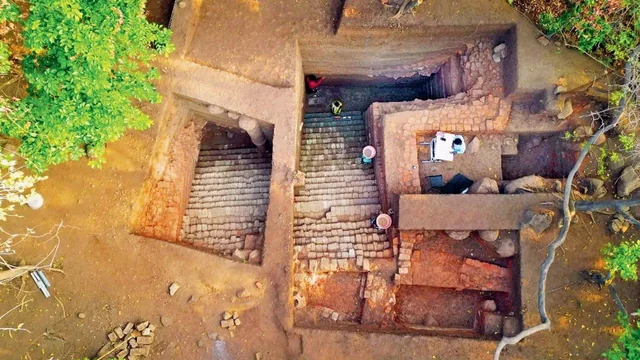
- A major excavation by the Archaeological Survey of India (ASI) on Elephanta Island has revealed a 1,500-year-old stepped reservoir.
Key Features of the Stepped Reservoir
- The excavated structure is a T-shaped stepped reservoir, indicating a planned architectural design.
- The reservoir measures about 14.7 metres in length, with widths varying between 6.7 metres and 10.8 metres.
- The excavation has reached a depth of five metres, exposing 20 well-aligned steps made of stone blocks.
Elephanta Caves
- The Elephanta Caves, located on Elephanta Island (historically known as Gharapuri, meaning “city of caves”), are a UNESCO World Heritage Site situated in Mumbai Harbour.
- The name “Elephanta” was given by the Portuguese in the 16th century after they discovered a large stone elephant near the island, while the original name Gharapuri was used by local inhabitants.
- Historically, the island was associated with multiple dynasties.
- The Kalachuris of Mahishmati are considered the main patrons of the caves during the 6th century CE, as supported by recent coin discoveries of King Krishnaraja. Before them, the Konkan Mauryas ruled the region, followed by the Chalukyas and Rashtrakutas who maintained its importance.
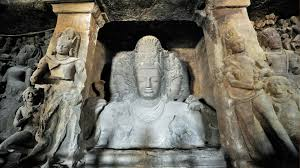
- There are seven caves, of which Cave 1 (Great Cave) is the most prominent. It houses the iconic 20-feet Trimurti sculpture.
- A three-headed figure representing Shiva as Creator, Preserver, and Destroyer.
- The caves are carved out of basalt rock of the Deccan Trap formation.
Source: TH
Previous article
News In Short 08-04-2026
Next article
India–Türkiye Talks Signal Diplomatic Reset
